
Exclusive Wizz Air Pilot Resources Center
INSTANT ANSWERS FOR EVERY WIZZ AIR A320/321 QUESTION
Pre-configured AI copilots aligned with and built from trusted sources.
Master every oral exam, simulator ride, and line check—fast. 30-day money-back guarantee — see Refund Policy for details.
“MASTER EVERY LINE CHECK — IN 7 DAYS OR LESS”
What You'll Gain:
Transform your A320/321 proficiency with resources designed specifically for Wizz Air
- Your Always-Ready Technical Co-Pilot — An intelligent “Thought Partner” resources that enhances your decision-making during both reflective and critical moments, giving you unmatched confidence for flights, line checks, and simulator sessions.
- Save Both Time and Energy: Find insights immediately, without hassles
- Exam Confidence: Interactive Q&A system based on actual Wizz Air assessment patterns
- Career Advancement: Demonstrate exceptional technical knowledge in your next evaluation
- Reduced Study Time – Moving from hours of manual searching to instant answers
Your Exclusive Wizz Air Benefit:
- 85% SAVINGS: Just $6/month instead of $39/month (discount pre-applied).
- Immediate Access: No waiting period, start preparing today
Unlock Your Resources in 60 Seconds:
- Enter your Wizz Air email address.
- Begin your enhanced preparation journey
Additional Benefits:
- Always-Ready Copilot – Type your question, get a reference-backed answer in < 3 seconds.
- Line-Check Confidence – Mirrors Wizz Air technical assessments so nothing surprises you.
- Time Saved – Replace hours of search with instant clarification.
- 85% Crew Discount – Verified Wizz Air e-mail unlocks $6/monthly pricing.
- Career Edge – Demonstrate system mastery in command boards.
Limited to verified Wizz Air flight crew only
- Retail $39/month → $6/month (or $59/year)
- 30-day money-back guarantee—see Refund Policy for details.
Wizz Air Email *
Before a command assessment, this resources will give you the structured preparation you will find essential. The company-specific content makes all the difference.
THESE ARE YOUR EXCLUSIVE WIZZ AIR PILOT GATEWAY PRODUCTS DESIGNED SPECIFICALLY FOR WIZZ AIR A320/A321 FLIGHT CREW
They are intuitively and precisely engineered for Wizz Air operations
SHARPEN YOUR PROFESSIONAL EDGE
As a Wizz Air pilot, your career demands technical excellence. We’ve created two resources that match your exact needs.
- Oral Exam Prepper: Master your technical assessments with confidence
- "Heat of Battle" Answers: Access critical knowledge when it matters most
WHAT SETS THIS APART FOR WIZZ AIR PILOTS
- Wizz Air Procedural Alignment: Content specifically mapped to your company manuals, so you can master your technical assessments
- A320/321 Type-Specific: Focused exclusively on your aircraft systems and limitations
- Operational Relevance: Created by A320 Pilot Paul Toensing specifically for Wizz Air operations
VALUE PROPOSITION:
- The “Oral Exam Prepper” resources will give you the clearly structured insights for any preparations or discussions, and you will come to find it increasingly indispensable.
- The “Heat of Battle”- Answers resources augments and improves technical deliberations before and during flights, line checks and simulator sessions, just as a great “Thought Partner” should.
- Wizz Air-specific content eliminates wasted time, by avoiding unwelcome rabbit holes. with fuzzy or baffling “guidance”.
RENOVATE YOUR TECHNICAL READINESS TODAY
- From Complexity to Clarity. From Preparation to Performance.
- Your Expertise Amplified.
Interactive oral exam preparation thought partner for Wizz Air A320/321 flight crew. Collaborative Examiner-style Q&A that builds crystallized understanding.
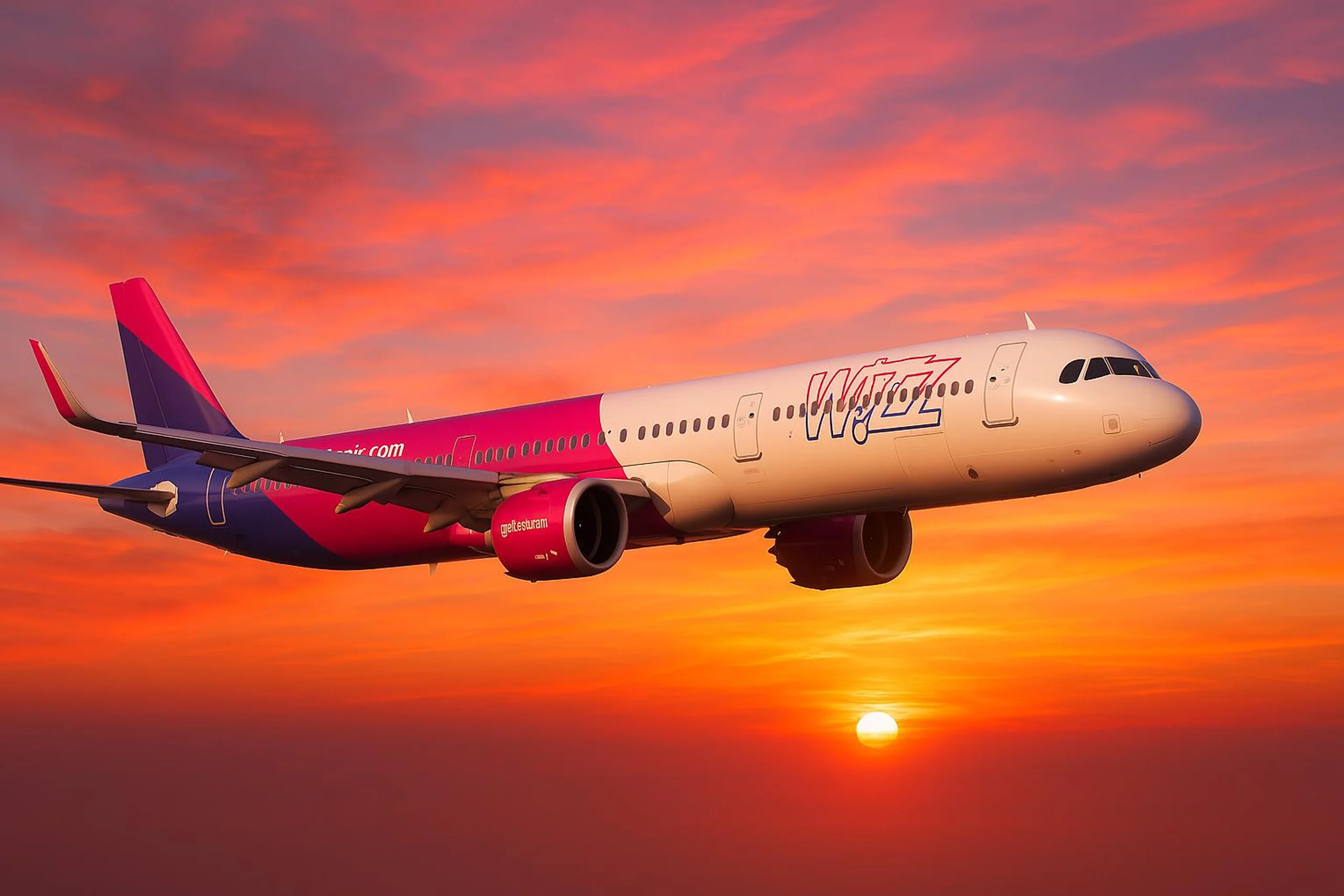
Interactive rapid-reference study partner for Wizz Air A320/321 crews. Citation-backed answers, grounded in operational references. For exam preparation and training.
We do not reproduce or distribute airline-proprietary content.
Not ready to subscribe yet? Start with the free card.
Download the A320 Unreliable Speed Recovery Card — the immediate-actions reference in a pocket-ready format. No subscription needed.
❓ FREQUENTLY ASKED QUESTIONS
Is this product specifically built for Wizz Air operations?
Yes. The content is mapped directly to Wizz Air A320/A321 company manuals and operational procedures — not generic Airbus material. Every answer reflects Wizz Air-specific standards.
What two products are included for Wizz Air pilots?
The Oral Exam Prepper is your conversational oral-exam coach — it uses examiner-style questioning to replicate how an examiner actually conducts an oral, building real understanding rather than rote memorization. The Heat of Battle — Answers is the no-nonsense technical authority — rapid-response, citation-backed, and variant-aware, delivering precise, citation-backed answers grounded in operational references. One challenges you to think. The other gives you the answer when you need it now.
How do I unlock the $6/month pilot discount?
Simply enter your Wizz Air company email address. The system verifies your email format to confirm you are active Wizz Air flight crew and automatically applies the 85% crew discount.
Does it cover both the A320 and A321 variants?
Yes. Both the A320 and A321 are covered within the same product, reflecting the full Wizz Air fleet that pilots operate across.
Is there a risk in trying it?
None. Every subscription includes a 30-day money-back guarantee — see Refund Policy for details. You can cancel at any time.
Smoke Logic: In the SMOKE/FUMES procedure, why is it critical to return VENTILATION BLOWER and EXTRACT to AUTO before isolating a pack?
OVRD blower/extract can defeat single-pack press.
System Fact
When both VENTILATION BLOWER and EXTRACT are in OVRD, a single pack may not be able to maintain cabin pressure; the SMOKE/FUMES procedure returns BLOWER/EXTRACT to AUTO before selecting a pack OFF.
Operational Risk / Trap
Isolating a pack with BLOWER/EXTRACT still OVRD can drive unwanted cabin altitude/pressurization issues and mislead crews into chasing the wrong “pack fault” or “pressurization problem.”
Manual Verification
653645391-WZZ-FCOM-19May2021.pdf — PRO-ABN-SMOKE [QRH] SMOKE / FUMES / AVNCS SMOKE, P22/50
Fire Detection: How does the A320 fire detection system handle a ‘Dual Loop’ failure versus a single loop failure?
One loop failed: warning stays; both loops: lost.
System Fact
Fire warning triggers if both loops A and B send a fire signal, or one loop sends a fire signal and the other is failed; a fault in one loop does not affect warning, but a loop-fault caution appears with one loop failed or both loops failed (or FDU failure).
Operational Risk / Trap
With both loops failed, you should assume loss of fire detection (no warning reliability); don’t “wait for a fire warning” to confirm—use other cues and act early.
Manual Verification
653645391-WZZ-FCOM-19May2021.pdf — DSC-26-20-10 Fire Detection and Fire Detection and Detection Fault Logic, P1/2 and P2/2
Discharge Logic: What is the specific ‘Logic Trigger’ that causes the DISCH light to illuminate on the Engine Fire panel?
DISCH light = extinguisher bottle pressure low.
System Fact
On the ENG fire AGENT 1(2) pushbutton-switches, DISCH illuminates amber when the corresponding fire extinguisher bottle has lost pressure.
Operational Risk / Trap
DISCH confirms bottle pressure loss (discharge/pressure drop), not that the fire is extinguished; avoid prematurely expending the second agent without reassessing indications and timing.
Manual Verification
653645391-WZZ-FCOM-19May2021.pdf — DSC-26-20-20 FIRE Panel (AGENT 1(2) PB-SW), P2/6
The OEP contains 300+ system traps like these. Full cross-system logic, Wizz Air FCOM alignment, and interactive oral exam Q&A — ready in 60 seconds.
Hone Your Edge →Hydraulic Priority Logic: When GREEN system pressure drops, which specific systems lose hydraulic supply first due to priority valves, and what is the logic behind this isolation?
GREEN low P: heavy users are cut to save F/CTL.
System Fact
Priority valves cut off hydraulic power to heavy-load users when system pressure gets low; on the GREEN system, heavy-load users include landing gear/doors actuation (GREEN actuates all gear and doors) and normal braking/autobrake (normal braking uses GREEN pressure).
Operational Risk / Trap
Crews may chase “save the system” by cycling gear/brakes during low GREEN pressure; that can accelerate pressure decay and remove what’s left for essential control, while also creating surprise loss of normal brake availability (reversion to alternate braking logic).
Manual Verification
653645391-WZZ-FCOM-19May2021.pdf — DSC-29-10-20 (Priority Valves), P 2/6; DSC-32-10-10 (Landing Gears and Doors Operation), P 4/6; DSC-32-30-10 (Normal Braking), P 5/8
Weather Radar Tilt Management: What is the specific risk of leaving the Radar Tilt in ‘AUTO’ while maneuvering around high-reflectivity cells at low altitudes during the approach phase?
AUTO tilt can overscan, understating cell threat close-in.
System Fact
Autotilt automatically adjusts antenna tilt to optimize detection and reduce ground clutter (and below 2 300 ft AGL it also biases for short-range detection/PWS scanning); incorrect tilt/overscanning can cause the ND to show only the less-reflective part of a storm cell, leading to underestimation or non-detection.
Operational Risk / Trap
In tight vectoring/turning around red returns at low altitude, AUTO tilt can “clean up” the picture (ground clutter management + scan logic) and hide the most reflective core/top cues; crews may commit into a narrowing gap or too-close deviation because the displayed intensity/shape is misleading without active manual tilt cross-checking.
Manual Verification
653645391-WZZ-FCOM-19May2021.pdf — DSC-34-SURV-30-10 (Weather Radar Description/Autotilt), P 2/4; FCTM A320 20150318 - ELIB.pdf, SI-070 (Use of Radar: Overscanning risk), P 3/12; SI-070 (Automatic Tilt Control/Approach tilt guidance), P 6/12
Unreliable Speed: What are the specific pitch and power targets for an Unreliable Airspeed event during the initial climb (flaps 1, 2, or 3)?
Unreliable IAS climb: 15 deg/TOGA then 10 deg/CLB.
System Fact
Memory items command PITCH/THRUST targets: below THRUST RED ALT 15 deg/TOGA; above THRUST RED ALT and below FL100 10 deg/CLB; above THRUST RED ALT and above FL100 5 deg/CLB, with FLAPS in CONF 0/1/2/3 to MAINTAIN CURRENT CONF.
Operational Risk / Trap
Changing config or reducing thrust early while IAS is unreliable can quickly put the aircraft near stall/overspeed; lock pitch/thrust first, then troubleshoot.
Manual Verification
653645391-WZZ-FCOM-19May2021.pdf — PRO-ABN-NAV [MEM] UNRELIABLE SPEED INDICATION, P1/190
Emergency Descent: During an Emergency Descent, what is the specific risk of leaving the cabin in Smoke Configuration?
Smoke removal config starts cabin depressurization.
System Fact
The REMOVAL OF SMOKE / FUMES procedure initiates descent to FL100/MEA-MORA while increasing cabin altitude to 10 000 ft/MEA-MORA, and states cabin depressurization starts when descent is initiated.
Operational Risk / Trap
If you leave the aircraft in smoke-removal style cabin configuration during an emergency descent, the cabin altitude can rise aggressively (and may be harder to control with reduced pack capability), increasing hypoxia risk and the chance of passenger oxygen mask deployment/pressure-related injuries.
Manual Verification
653645391-WZZ-FCOM-19May2021.pdf — PRO-ABN-SMOKE [QRH] REMOVAL OF SMOKE / FUMES, P29/50
Terrain Escape Logic: During a GPWS ‘PULL UP’ alert, what are the specific ‘Memory Items’ for the pitch and thrust, and does the autopilot remain engaged during the maneuver?
PULL UP: full backstick and TOGA; AP OFF.
System Fact
Memory items call for PITCH: PULL UP (full backstick and maintain) and THRUST LEVERS: TOGA; during night or IMC the autopilot is selected OFF as part of the immediate response.
Operational Risk / Trap
Leaving speed brakes out or changing configuration early can ruin climb gradient; keep speed brakes retracted and do not change configuration (slats/flaps/gear) until clear of obstacle.
Manual Verification
653645391-WZZ-FCOM-19May2021.pdf — PRO-ABN-SURV [MEM] EGPWS CAUTIONS, P 1/8
If you didn’t know the 15 deg/TOGA trap — you’re memorizing the wrong numbers. The OEP drills every memory item with the exact logic behind each one.
Hone Your Edge →Emergency Descent Logic: During an Emergency Descent, what is the specific ‘Inhibition Rule’ for the landing gear if the descent is initiated due to a structural failure versus a standard rapid depressurization?
Structural damage: consider gear; if used, slow VLO.
System Fact
With structural damage suspected, the procedure is MANEUVER WITH CARE and CONSIDER L/G EXTENSION; if the landing gear is extended, speed must be reduced to VLO/VLE.
Operational Risk / Trap
Treating gear as “automatic drag” can overstress the airframe. Extending the landing gear without reducing speed to VLO/VLE, or aggressively maneuvering with suspected structural damage, increases the risk of further structural failure.
Manual Verification
653645391-WZZ-FCOM-19May2021.pdf — PRO-ABN-MISC, [MEM] EMER DESCENT, P 1/34; PRO-ABN-CAB_PR, CAB PR EXCESS CAB ALT (Cont’d), P 3/14
Alpha Floor Protection: What is the specific ‘Logic Trigger’ that causes an Alpha Floor engagement, and under what flight control law degradations is this protection entirely lost?
A.FLOOR when α>αfloor or >14° nose-up input.
System Fact
FAC triggers alpha-floor when AoA is above a configuration-based threshold (and in CONF 3/FULL the threshold decreases with deceleration rate) or when sidestick nose-up deflection exceeds 14° with pitch attitude or AoA protection active; alpha-floor is lost under alternate or direct law.
Operational Risk / Trap
Pulling through αPROT can auto-command TOGA at low energy. If in alternate/direct law, crews may expect alpha-floor but it is unavailable, so low-speed events must be managed without TOGA auto-thrust protection.
Manual Verification
653645391-WZZ-FCOM-19May2021.pdf — DSC-22_40-30 Flight Envelope Function (Alpha-Floor Protection), P 4/4; DSC-27-20-20 Flight Control System - Reconfiguration Control Laws, P 13/16
Cargo Smoke Protection: In the event of a Cargo Smoke indication, what is the specific operational difference between the ‘Agent 1’ and ‘Agent 2’ discharge logic, and how is concentration maintained over time?
Cargo smoke: BTL1 fast; BTL2 metered long.
System Fact
Bottle/Agent 1 discharges quickly (approximately 60 s) to achieve initial extinguishing concentration, while Bottle/Agent 2 discharge is flow-metered to maintain concentration for an extended duration (at least 75 min); operationally, the procedure calls for AGENT 2 discharge 60 min after AGENT 1.
Operational Risk / Trap
Early or unnecessary AGENT 2 discharge destroys the “holding” capability; also expect SMOKE warning to persist after discharge (detectors are sensitive to agent and residual gases), so don’t misread a continuing warning as “agent ineffective” and waste the second bottle.
Manual Verification
653645391-WZZ-FCOM-19May2021.pdf — DSC-26-50-10 (Cargo Compartments Fire Extinguishing), P 6/12; PRO-ABN-SMOKE (SMOKE FWD CARGO SMOKE), P 45/50
Reverser Malfunction Handling: In the event of an ‘ENG REVERSER UNLOCKED’ warning in flight, what is the specific ‘Logic Trigger’ that determines whether the FADEC will automatically command the engine to idle?
FADEC idles if reverser feedback exceeds 5% deploy.
System Fact
The FADEC automatically selects thrust to IDLE in flight (or on ground) when it detects inadvertent reverser deployment, triggered when thrust reverser feedback position is above 5% deployed.
Operational Risk / Trap
Treating “UNLOCKED” as purely a nuisance can be fatal if it transitions toward deployment—buffet/asymmetry can appear fast; if idle is auto-selected, comply immediately (idle the lever, speed limits, and LAND ASAP logic) and don’t mask the event with thrust/A/THR chasing.
Manual Verification
653645391-WZZ-FCOM-19May2021.pdf — DSC-70-70 (Thrust Reverser System Protection), P 6/6; PRO-ABN-ENG (ENG 1(2) REVERSE UNLOCKED), P 230/300
Engine Fire Management: What is the specific ‘Verification Logic’ used to determine if an Engine Fire has been successfully extinguished before deciding to discharge the second fire agent bottle?
2nd bottle if FIRE warning still on after 30 s.
System Fact
Discharge AGENT 2 only if the fire warning remains 30 seconds after AGENT 1 discharge.
Operational Risk / Trap
Discharging too early wastes agent; wait the full 30 s. Misreading transient indications can lead to unnecessary AGENT 2 use and leave no remaining fire-extinguishing capability for a re-ignition.
Manual Verification
653645391-WZZ-FCOM-19May2021.pdf — PRO-ABN-ENG, ENG 1(2) FIRE (IN FLIGHT), P 139/300
Three logic traps. Three checkride failures waiting to happen. The OEP puts you through every one — interactively — before your TRE does.
Hone Your Edge →Descent Energy Management: When using ‘DES’ mode, what is the specific risk of the aircraft entering a ‘V/S’ reversion if the FMGS speed profile is significantly exceeded while in a high-drag configuration?
Loss of NAV makes DES revert to V/S on current rate.
System Fact
When NAV mode disengages (manual or automatic) with DES engaged, the vertical mode reverts to V/S on the current value; the aircraft is no longer guided on the descent profile and constraints are disregarded.
Operational Risk / Trap
A steep inherited V/S can drive a VMO/VFE event and triple click. After DES to V/S reversion, the AP may pitch down to hold the V/S, causing acceleration toward VMO/VFE; speed protection may then temporarily abandon the V/S target to maintain VMAX, creating high workload, missed constraints, and energy instability if not promptly recognized.
Manual Verification
653645391-WZZ-FCOM-19May2021.pdf — DSC-22_30-75 Mode Reversions, P 2/14 and P 13/14; FCTM A320 20150318 - ELIB.pdf, NO-090 Descent (Selected Descent / Mode Reversion), P 6/8
Icing Identification: According to the manual, what is the specific ‘Visual Requirement’ for identifying ice accretion on the airframe before activating Engine Anti-Ice versus Wing Anti-Ice?
ENG A.ICE is not visual; WING A.ICE is evidence-based.
System Fact
Engine anti-ice must be turned ON when icing conditions exist/are anticipated and should not wait for visible ice; wing anti-ice must be turned ON if there is evidence of ice accretion such as ice on the visual indicators or on the wipers (or SEVERE ICE DETECTED alert).
Operational Risk / Trap
Waiting for visible ice before ENG A.ICE is a flameout trap. Delaying engine anti-ice until ice is seen increases engine icing risk, while delaying wing anti-ice after evidence appears allows wing leading-edge accumulation and degraded margins.
Manual Verification
653645391-WZZ-FCOM-19May2021.pdf — PRO-NOR-SOP-16 Standard Operating Procedures - Descent Preparation, P 9/10; PRO-NOR-SUP-ADVWXR Supplementary Procedures - Adverse Weather, MINIMUM SPEED WITH ICE ACCRETION, P 8/16
Compliance & Accuracy — Manual Versions Used
653645391-WZZ-FCOM-19May2021.pdf — Wizz Air A320/321 FCOM (Primary Reference)
FCTM A320 20150318 - ELIB.pdf — A320 Flight Crew Technique Manual (Secondary Reference)
Content sourced exclusively from Wizz Air-issued documentation. Not affiliated with Airbus or Wizz Air.
If you didn’t know the PTU overheat trap, the FADEC 5% rule, or the alpha-floor law degradation chain —
you’re a passenger in your own checkride.