
Exclusive Air Arabia Pilot Resource Center
INSTANT ANSWERS FOR EVERY AIR ARABIA A320/A321 QUESTION
Pre-configured AI copilots aligned with and built from trusted sources.
Master every oral exam, simulator ride, and line check—fast. 30-day money-back guarantee — see Refund Policy for details.
“MASTER EVERY LINE CHECK — IN 7 DAYS OR LESS”
What You'll Gain:
Transform your A320/A321 proficiency with resources designed specifically for Air Arabia
- Your Always-Ready Technical Co-Pilot — An intelligent “Thought Partner” resource that enhances your decision-making during both reflective and critical moments, giving you unmatched confidence for flights, line checks, and simulator sessions.
- Save Both Time and Energy: Find insights immediately, without hassles
- Exam Confidence: Interactive Q&A system based on actual Air Arabia assessment patterns
- Career Advancement: Demonstrate exceptional technical knowledge in your next evaluation
- Reduced Study Time – Moving from hours of manual searching to instant answers
Your Exclusive Air Arabia Benefit:
- 85% SAVINGS: Just $6/month instead of $39/month (discount pre-applied).
- Immediate Access: No waiting period, start preparing today
Unlock Your Resources in 60 Seconds:
- Begin your enhanced preparation journey
- Enter your Air Arabia email address.
Additional Benefits:
- Always-Ready Copilot – Type your question, get a reference-backed answer in < 3 seconds.
- Line-Check Confidence – Mirrors Air Arabia technical assessments so nothing surprises you.
- Time Saved – Replace hours of search with instant clarification.
- 85% Crew Discount – Verified Air Arabia e-mail unlocks $6/monthly pricing.
- Career Edge – Demonstrate system mastery in command boards.
Limited to verified Air Arabia flight crew only
- Retail $39/month → $6/month (or $59/year)
- 30-day money-back guarantee — see Refund Policy for details.
Air Arabia Email *
Before a command assessment, this resource will give you the structured preparation you will find essential. The company-specific content makes all the difference.
THESE ARE YOUR EXCLUSIVE AIR ARABIA PILOT GATEWAY PRODUCTS DESIGNED SPECIFICALLY FOR AIR ARABIA A320/A321 FLIGHT CREW
They are intuitively and precisely engineered for Air Arabia operations
SHARPEN YOUR PROFESSIONAL EDGE
As a Air Arabia pilot, your career demands technical excellence. We’ve created two resources that match your exact needs.
- Oral Exam Prepper: Master your technical assessments with confidence
- "Heat of Battle" Answers: Access critical knowledge when it matters most
WHAT SETS THIS APART FOR AIR ARABIA PILOTS
- Air Arabia Procedural Alignment: Content specifically mapped to your company manuals, so you can master your technical assessments with confidence
- A320/A321 Type-Specific: Focused exclusively on your aircraft systems and limitations
- Operational Relevance: Created by Airline Pilot Paul Toensing specifically for Air Arabia operations.
VALUE PROPOSITION:
- The “Oral Exam Prepper” resource will give you the clearly structured insights for any preparations or discussions, and you will come to find it increasingly indispensable.
- The “Heat of Battle”- Answers resource augments and improves technical deliberations before and during flights, line checks and simulator sessions, just “Thought Partner” should.
- Air Arabia-specific content eliminates wasted time, by avoiding unwelcome rabbit holes with fuzzy or baffling “guidance”.
RENOVATE YOUR TECHNICAL READINESS TODAY
- From Complexity to Clarity. From Preparation to Performance.
- Your Expertise Amplified.
- As a Air Arabia pilot, your career demands technical excellence. We've created two resources that match your exact needs. With:
Interactive oral exam preparation thought partner for Air Arabia A320/A321 crew. Collaborative Examiner-style Q&A that builds crystallized understanding.
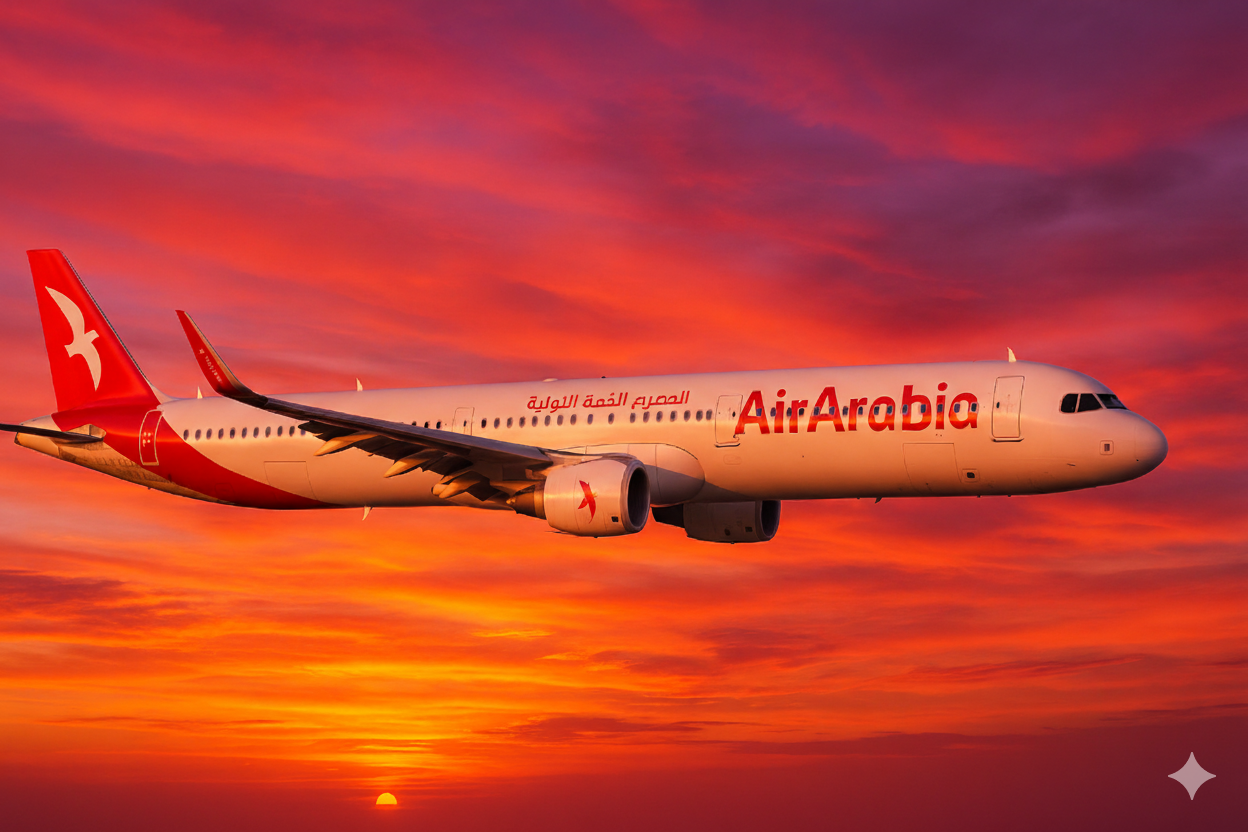
Interactive rapid-reference study partner for Air Arabia A320/A321 pilots. Citation-backed answers, grounded in operational references. For exam preparation and training.

We do not reproduce or distribute airline-proprietary content.
Not ready to subscribe yet? Start with the free card.
Download the A320 Unreliable Speed Recovery Card — the immediate-actions reference in a pocket-ready format. No subscription needed.
Know which protections you keep in Alternate Law — before you find yourself in a bind.
Free 2-page A320 Alternate Law / ADR Isolation Quick Reference. Memory items, protection status, ADR isolation logic, BUSS activation, and the complete six-step sequence.
Think you're ready for the oral? Prove it in 4 minutes.
7 scenario-based questions. No obviously wrong answers. Your diagnostic profile tells you where the gaps actually are.
❓ FREQUENTLY ASKED QUESTIONS
Is this product tailored specifically for Air Arabia pilots?
Yes. The content is mapped to Air Arabia A320/A321 company manuals and operational procedures. It is not generic Airbus material — every answer is built around Air Arabia-specific standards.
What two products are available for Air Arabia pilots?
The Oral Exam Prepper is your conversational oral-exam coach — it uses examiner-style questioning to replicate how an examiner actually conducts an oral, building real understanding rather than rote memorization. The Heat of Battle — Answers is the no-nonsense technical authority — rapid-response, citation-backed, and variant-aware, delivering precise, citation-backed answers grounded in operational references. One challenges you to think. The other gives you the answer when you need it now.
How do I access the $6/month crew discount?
Enter your Air Arabia company email address. The system verifies your email format to confirm active flight crew status and automatically applies the 85% crew discount — no code needed.
Does it cover both A320 and A321 operations?
Yes. Both aircraft variants operated by Air Arabia are covered within the same product, so you are prepared regardless of which type you are rostered on.
Is there a commitment or lock-in period?
No. It is a monthly subscription you can cancel anytime, and every purchase includes a 30-day money-back guarantee — see Refund Policy for details.
Sharjah, July. OAT 47°C. You are near structural max weight for a midday departure. The EFB returns a FLEX temperature only 2°C above actual OAT. Your fuel temperature is reading 51°C. During the crossbleed start of Engine 1, EGT climbs rapidly toward the limit.
Is your fuel temperature legal for departure? What is your FLEX limitation if TMAXFLEX for your MSN is ISA+53? And if the automatic start trends toward EGT overlimit, what does the FCOM recommend for your second attempt?
Fuel temperature: 51°C is legal if your aircraft effectivity shows MAXI 54°C - but check whether JET A limits apply (49°C for certain effectivities). If so, you may be non-compliant and must delay until fuel cools.
FLEX limitation: with OAT 47°C and TMAXFLEX of ISA+53, your ceiling is approximately 68°C at sea level - you have margin, but the EFB may still limit your MTOW below structural max due to runway and obstacle constraints.
Engine start: if the automatic start is marginal or aborted due to EGT overlimit, the FCOM recommends manual engine start for the second attempt, respecting abort criteria per the procedure.
"Sharjah in July: OAT 47°C, QNH low, long taxi, and you're near structural max. Talk me through when FLEX is allowed, what limits TFLEX, and what you do when the EFB gives you a performance-limited weight."
FLEX Takeoff Basics
Flexible takeoff is performed by setting the thrust levers to FLX/MCT and entering a FLEX TO TEMP in the PERF T/O page. Core gate: FLEX is for dry and wet runways only. Derated thrust can be used on all runway states.
FLEX Limitations
Not permitted on contaminated runways. Not permitted if MEL/CDL conditions prohibit flexible takeoff. TFLEX must not exceed TMAXFLEX, which is fleet/aircraft effectivity dependent - limitation pages show different TMAXFLEX values (ISA + xx°C) depending on MSN.
The Hot Gulf Reality
At very high OAT the FLEX temperature margin collapses - you cannot assume-temp much higher than actual. You are often performance-limited (MTOW perf) by runway, obstacles, or conditions rather than structural max. The EFB optimization targets maximum performance-limited takeoff weight and optimum thrust for conditions. If the EFB returns a lower MTOW perf: reduce weight (payload/fuel) or change allowable performance inputs within company policy. You do not force FLEX beyond limits.
"You're flying an RNAV (GNSS) NPA into a Pakistan outstation with limited ground aids. After you pass the FAF inbound you lose GPS PRIMARY or the aircraft loses F-APP capability. What are your discontinuation gates?"
GPS PRIMARY Lost
If GPS PRIMARY LOST appears on the ND during the approach: discontinue the approach, UNLESS (1) GPS PRIMARY is lost on only one FMGC - continue using AP/FD associated to the other FMGC, or (2) GPS is not required and navigation accuracy is confirmed against radio navaid raw data.
If FM/GPS POS DISAGREE ECAM caution triggers during the approach: discontinue unless radio navaid raw data is available and indicates correct navigation to continue using selected FMGS modes.
F-APP Capability Loss
If F-APP capability is lost and F-APP + RAW or RAW only is displayed on FMA: discontinue the approach. The gate is the FMA capability indication - not the point at which APPR mode was engaged.
"Turnaround in the Gulf at OAT 45-50°C with passengers boarding: explain pack performance, pack flow selection, and what operational traps damage cabin comfort or aircraft cooling."
Pack Flow Selection
LO/NORM/HI are the pack flow selections. LO is for economy. HI gives maximum conditioned airflow and is automatically selected in single pack operation and in APU bleed operation.
Auto Flow Increase
If LO is selected, pack flow can be automatically increased up to 100% when cooling demand cannot be satisfied. The condition is specifically cooling demand, not a generic "hot/humid" trigger.
Start / Bleed Trap
With the crossbleed valve open at engine start, both pack flow control valves close. You lose pack cooling at the moment you most need it during hot turnarounds.
Ground Heat Protection
It is not recommended to operate on ground without air conditioning supply for more than 20 minutes. Use external power where possible to reduce APU heat load.
"Remote station, no ground air, hot day, and you're flirting with start limits. Tell me your crossbleed start technique and limits, and what you do to reduce EGT exceedance risk."
Crossbleed Start Gates
Ensure bleed pressure above 30 PSI before start initiation and at least 25 PSI during start. Not permitted during pushback. Do not use external pneumatic supply at the same time as crossbleed starting. After starting the second engine: close crossbleed, then restore engine bleed and packs as required.
EGT Margin Management
Manual engine start is recommended after aborting a start due to EGT overlimit, or in case of low or insufficient start air pressure. If the automatic start is marginal in heat or poor air conditions, shift to manual start and respect abort criteria per the procedure.
"Dust storm risk at a desert airfield. What are your operational protections for engines and systems, and what do you do on takeoff, in-flight, and after landing if you're operating in sand or dust?"
Ground Operations
External power preferred. Not recommended to operate on ground without A/C supply for more than 20 minutes. Consider PACKS OFF for takeoff to prevent air conditioning system contamination when operating with sand or dust.
In-Flight Contamination Procedure
The FCOM provides a dedicated "Operations with Volcanic Ash, Sand or Dust" flow including PACK 1/2 OFF and other configuration and protection steps. The procedure covers the entire sequence: takeoff, in-flight encounter, after takeoff, and after landing flows to reduce contamination and manage cooling and ventilation choices.
Examiner Summary
Avoid ingesting contaminants. Avoid contaminating packs. Minimize unnecessary airflow paths that pull dust into the system. Follow the dedicated adverse-weather procedure.
"Quick turn, high OAT, and you're thinking tankering. Give me the hard limitations: minimum fuel requirements and fuel temperature limits."
Minimum Fuel for Takeoff
Minimum fuel quantity for takeoff: 1,500 kg. ECAM alerts related to wing tank low level (such as FUEL WING TK LO LVL) must not appear for takeoff.
Maximum Fuel Temperature
The fuel temperature table shows MAXI 54°C. JET A MAXI is 49°C for certain aircraft effectivities. The earlier figure of 45°C / 113°F was incorrect and does not match the FCOM limitation pages.
Also removed: "minimum fuel quantity for landing: 1,000 kg" and a "heat sink" rationale - neither is found in the FCOM LIM-FUEL pages.
Tankering Decision Logic
Tankering is not just a cost decision. You must remain compliant with temperature limits, fuel minima, and account for performance penalties from carrying extra weight in ISA+30 or above conditions.
"You're arriving into terrain-challenged airfields in Central or South Asia. Explain what the EGPWS terrain functions do, what the TERR pushbutton really inhibits, and why that matters on these routes."
TERR Pushbutton Effects
TERR pb-sw: predictive modes of the GPWS are inhibited. Basic GPWS modes 1-5 remain operative. This inhibition may lead to nuisance basic GPWS Mode 2 alerts on approaches with sudden radio altitude changes (such as cliffs). Predictive GPWS modes are failed; NAV GPWS TERR DET FAULT triggers and terrain is not shown on the ND.
Note: the TERR pb does not inhibit altitude callouts - this is not stated in the FCOM.
RNP AR Restriction
RNP AR operations are not permitted with TERR selected OFF. This restriction applies specifically to RNP AR - not all RNP operations as previously stated.
Runway Clearance Floor
The system provides TOO LOW TERRAIN protection related to runway clearance in takeoff and landing phases (Runway Clearance Floor function). On terrain routes, your job is to ensure correct setup and understand exactly what inhibiting TERR removes from your safety net.
"Middle East weather can go from calm to nasty fast. Talk me through predictive vs reactive windshear, and the crew handling priorities - especially close to the ground."
Detection Philosophy
The FCTM treats windshear as a primary hazard with dedicated guidance covering both predictive alerts and reactive warnings. Microbursts are addressed explicitly as a major windshear threat with specific recognition, avoidance, and handling guidance.
Handling Priorities
Maximize energy: apply appropriate thrust, minimize configuration changes, and fly the commanded guidance when applicable (Airbus windshear recovery philosophy).
Air Arabia Operational Context
In gusty convective desert conditions, you may be operating performance-limited or with reduced thrust selected. Windshear recovery can require immediate technique that overrides your normal thrust plan. Shamal winds, dust fronts, and convective outflows create low-level windshear risk at desert airports. Proficiency checks expect crisp predictive/reactive discipline, not generic "add power."
"You're crossing water in the Gulf region and lose all engines. Give me the procedure and the ditch-prep gates you will action."
Procedure Classification
This is a QRH/FCOM procedure, NOT a memory item. The complete ditching sequence follows - the original output incorrectly labelled these steps as "Memory Items."
Complete Ditching Gates
MIN RAT SPEED: 140 kt. GPWS SYS OFF; GPWS TERR OFF.
Above 3,000 ft AGL: configure for ditching using FLAP 2, KEEP LANDING GEAR UP, determine VAPP.
At 2,000 ft AGL: NOTIFY CABIN CREW FOR DITCHING; DITCHING pb ON.
At 500 ft AGL: BRACE FOR IMPACT. Touch down at minimum vertical speed, target pitch attitude 11°.
At touchdown: ALL ENG MASTERS OFF; APU MASTER SW OFF.
After ditching: Notify ATC, ALL FIRE pb push, ALL AGENT discharge, initiate EVACUATION.
"Fog at Sharjah: you're planning LVO. What are the approach and takeoff gates, what can kill the approach legally or operationally, and what does the company supplement say about CAT II/III minima?"
Air Arabia CAT II/III approvals, minima, airfield authorization, and LVTO gates must be sourced from Air Arabia OM-A/OM-B and the airline's own LVO approval documentation under GCAA oversight. The content below uses Airbus-generic FCOM principles only.
Airbus-Generic LVO Principles
The A320 family supports CAT II and CAT III operations when the operator holds the appropriate approvals and the aircraft configuration meets the requirements. LVO approach discipline includes a dedicated review before descent and restrictions on PED use during the approach phase.
LVTO procedures are tied to specific RVR thresholds with associated operational requirements. The specific minima, approval pages, and airfield authorizations are operator-specific and regulatory-dependent under GCAA.
Unreliable Speed: What are the memory pitch and thrust targets for an A320 unreliable speed indication during takeoff?
AP OFF, A/THR OFF, FD OFF — 15° pitch / TOGA below Thrust Reduction Altitude.
System Fact
The QRH memory item is conditional: apply pitch/thrust targets only if the safe conduct of the flight is impacted. Below Thrust Reduction Altitude the target is 15 degrees pitch with TOGA thrust — the gate is Thrust Reduction Altitude, not “takeoff phase” in generic terms. After the flight path is stabilized, crosscheck all speed indications including backup speed per QRH continuation. RESPECT STALL WARNING is called in the continuation phase, not as an immediate takeoff-phase action.
Operational Risk / Trap
With ADR disagreement, one or more airspeed indications may be erroneous — treat speed as unreliable until stabilized and handled per QRH memory items. The trap is picking the tape that looks reasonable: a steady-looking display can be stably wrong, and chasing it drives pitch hunting that creates real stall or overspeed risk. ISA+25 departing Sharjah compounds this — high density altitude degrades climb performance, so pitching for a wrong speed target in thin air at max weight leaves almost no margin.
Manual Verification
A320/A321 QRH 20250225 — 26.02A ADR CHECK PROC / UNRELIABLE SPEED INDICATION (memory items, conditional trigger); 26.02C UNRELIABLE SPEED INDICATION Cont’d (RESPECT STALL WARNING in continuation phase)
Emergency Descent: What is the A320 emergency descent procedure after loss of pressurization at high altitude?
Crew oxygen masks on first — hypoxia degrades decision-making before you recognize it is happening.
System Fact
Memory item sequence: CREW OXY MASKS USE, SIGNS ON, EMER DESCENT INITIATE. If A/THR not active: thrust levers IDLE. Speedbrakes FULL. When established: speed to MAX/APPROPRIATE. Engine mode selector to IGN. Target altitude is the higher of FL100 or MEA/MORA. If cabin altitude exceeds 14,000 ft: passenger oxygen masks MAN ON and confirm. ATC: squawk 7700 unless otherwise specified. Set crew oxygen mask dilution to NORM to conserve oxygen — leaving it at 100% may result in insufficient quantity to cover the full descent profile.
Operational Risk / Trap
At FL370 over the Gulf with a window loss, time of useful consciousness is measured in seconds. Every moment spent coordinating before donning the mask is a moment closer to making decisions you will not remember making. The oxygen dilution detail is the trap most crews miss — NORM saves oxygen, 100% burns through it faster than the descent profile allows. ATC notification and squawk 7700 are essential for separation, but they come after masks and after the descent is initiated. The sequence is survival first, communication second.
Manual Verification
A320/A321 FCOM 250225_V1 — PRO-ABN-MISC [MEM] EMER DESCENT P 1/32 (full memory item sequence, XPDR 7700 clarification, mask dilution)
The OEP contains 300+ system traps like these. Full memory item logic, Air Arabia QRH alignment, and interactive oral exam Q&A — ready in 60 seconds.
Hone Your Edge →Alpha Floor Protection: What triggers Alpha Floor protection on the A320 and how do you cancel TOGA Lock?
Alpha Floor activates on AOA beyond the Alpha Floor threshold — A/THR orders TOGA regardless of thrust lever position.
System Fact
Alpha Floor activates when the aircraft angle of attack goes beyond the Alpha Floor threshold, meaning the aircraft has decelerated significantly, below Alpha Protection speed. Autothrust activates automatically and orders TOGA thrust regardless of thrust lever position. When the aircraft accelerates and AOA drops below the Alpha Floor threshold, thrust is maintained and locked — TOGA LK appears on the FMA. To cancel TOGA Lock: disconnect A/THR using the instinctive disconnect, then set the thrust you actually want and manage speed with pitch and configuration discipline.
Operational Risk / Trap
The trainee’s confusion is common: “I was at approach thrust, why did it slam forward?” Because Alpha Floor does not care where the thrust levers are — it activates on AOA and commands TOGA automatically. The recovery trap is the go-around: TOGA thrust with nose-down chasing turns into an overspeed event if the crew does not cancel TOGA Lock and manage energy deliberately. The clean sequence is recognize TOGA LK on the FMA, disconnect A/THR, set appropriate thrust, manage the configuration. Do not let frozen TOGA thrust and a climbing pitch attitude run away from you.
Manual Verification
A320/A321 FCTM 20250225_V2 — AS-FG-10-2 ALPHA FLOOR P 6/8 (activation logic, AOA threshold, A/THR activates automatically, TOGA LK trigger, cancel via A/THR disconnect)
If you didn’t know the TOGA LK cancel sequence — your go-around becomes the emergency. The OEP drills every Alpha Floor scenario with the exact FCTM logic behind each trigger.
Hone Your Edge →Engine Fire Discharge Timing: Why does Airbus require a 10-second wait before discharging the fire extinguishing agent in an A320 engine fire?
Lower N1 reduces nacelle airflow — the agent stays in the compartment instead of being ventilated out.
System Fact
After completing memory items and pulling the ENG FIRE pushbutton, ECAM prompts AGENT 1 DISCH after 10 seconds with an automatic countdown. The rationale is mechanical: lower N1 means less airflow through the nacelle, which means the agent stays in the compartment longer rather than being ventilated out. If the fire warning remains 30 seconds after discharge of Agent 1, ECAM prompts AGENT 2 DISCH. The condition is specifically fire warning remaining after discharge — not simply 30 seconds of elapsed time.
Operational Risk / Trap
At 1,500 feet after a V1 continuation with a confirmed engine fire, the instinct is to discharge immediately. But discharging into a nacelle with high N1 and significant airflow wastes the agent — it gets ventilated out before it can suppress the fire. The 10-second wait is not hesitation; it is tactical timing designed to maximize the probability that one bottle does the job. Departing Sharjah at ISA+25, single-engine performance is already degraded by density altitude. The fire procedure must be correct the first time because the performance margins are not generous enough to absorb a second attempt.
Manual Verification
A320/A321 FCOM 250225_V1 — PRO-ABN-ENG ENG 1(2) FIRE (IN FLIGHT) P 99-100/196 (procedure, Agent 1 after 10 s, rationale, countdown, Agent 2 condition)
TCAS RA Compliance: Must an A320 pilot follow a TCAS RA even when it contradicts an ATC instruction?
Yes — always follow the TCAS RA in the correct direction, even if it conflicts with ATC.
System Fact
Airbus guidance is explicit: RA compliance is required in the correct direction even when it conflicts with ATC. Flying technique: PF disconnects the autopilot, follows the VSI green sector within 5 seconds, and requests both flight directors OFF. PM notifies ATC. Do not reverse the maneuver — TCAS coordination with the intruder aircraft may be in progress, and an opposite-direction maneuver can destroy the separation the system is building. When clear of conflict, resume normal navigation in accordance with ATC clearance.
Operational Risk / Trap
The DXB terminal area scenario is the trap: you are being vectored, ATC just gave you an altitude restriction, and the RA says DESCEND. Every trained instinct says follow ATC. But the RA is based on transponder-derived closure data that may show a collision geometry you cannot perceive from vectors and altitude assignments alone. The ATC instruction is based on a plan. The RA is based on physics. Follow the physics. The specific Airbus wording includes “in the correct direction” — if the RA says DESCEND, you descend. The system is coordinated and any freelancing can create the collision it was trying to prevent.
Manual Verification
A320/A321 FCTM 20250225_V2 — AS-TCAS P 6/10 (RA compliance in correct direction, even vs ATC, coordination caution); A320/A321 FCOM 250225_V1 — PRO-ABN-SURV [MEM] TCAS WARNINGS (PF actions, monitoring, technique)
Two regulatory traps. Two checkride failures waiting to happen. The OEP puts you through every one — interactively — before your TRE does.
Hone Your Edge →Technical Ground Truth — Manual Versions Used
A320/A321 QRH, Rev 25 February 2025 — 26.02A ADR CHECK PROC / UNRELIABLE SPEED INDICATION · 26.02C UNRELIABLE SPEED INDICATION Cont’d
A320/A321 FCOM, Rev 25 February 2025 — PRO-ABN-MISC [MEM] EMER DESCENT · PRO-ABN-ENG ENG 1(2) FIRE IN FLIGHT · DSC-22_30-40-60-30 Autoflight Modes · DSC-22_40-30 Alpha Floor Protection · DSC-22_30-50-50 Alpha Floor / TOGA Lock
A320/A321 FCTM, Rev 25 February 2025 V2 — AS-FG-10-2 Alpha Floor · AS-TCAS RA Compliance
Airbus AFM A320/A321, Rev 05 April 2023 — ABN-22-CATII (TOGA Lock Cancel) · ABN-34 UNRELIABLE AIRSPEED INDICATION
Airbus MMEL A320 — 22. Autoflight / Autothrust Function (Alpha Floor Availability)
Content sourced exclusively from Air Arabia-issued documentation. Not affiliated with Airbus or Air Arabia.
If you didn’t know the Sharjah density altitude trap, the TOGA LK cancel sequence, or the TCAS “correct direction” rule —
you’re a passenger in your own checkride.